
English
Views: 0 Author: Site Editor Publish Time: 2025-09-11 Origin: Site


Switches help control electricity in many devices. They make daily tasks simpler. Knowing the types of switches helps you pick the best one for your needs.
Mechanical switches, such as toggle and push-button switches, give a feeling when pressed. People often use them in things at home.
Electronic switches are in smart devices. They work without any moving parts. They let you control electricity fast and easily.
A switch helps you control electricity. You flip a switch to turn things on or off. Switches come in many shapes and sizes. Some switches are very small, like inside your phone. Others are big, like ones used in factories. You can find switches in almost every device you use.
Let’s see what parts make up a switch. Here is a table that shows the main parts and features:
Component | Description |
|---|---|
Poles | Show how many circuits a switch can control. |
Throws | Show how many output paths each pole has. |
Common Configurations | Include SPST, SPDT, DPST, and DPDT, with different poles and throws. |
Key Features | Size, default state, number of positions, mounting options, actuation method, voltage and current ratings, environmental protection. |
Popular Types | DIP switches, rotary DIP switches, slide switches, tactile switches, rocker switches, push button switches, toggle switches. |
Switches have different names, like toggle, rocker, or push-button. Some switches, called electronic switches, use special parts to control electricity. These do not have moving pieces.
You might wonder how a switch works. It is easy to understand. When you turn a switch on, two metal contacts touch. This lets electricity flow in the circuit. When you turn it off, the contacts move apart. This stops the electricity.
Think about switches you use every day. You press a button, flip a lever, or slide a tab. Each action either connects or breaks the circuit. That is how a switch controls your devices.
Some switches, like electronic switches, use tiny electronic parts. These switches work fast and do not need moving pieces. You find them in computers and smart devices.
Tip: Next time you use a switch, notice how simple it is to control something with just one quick move!
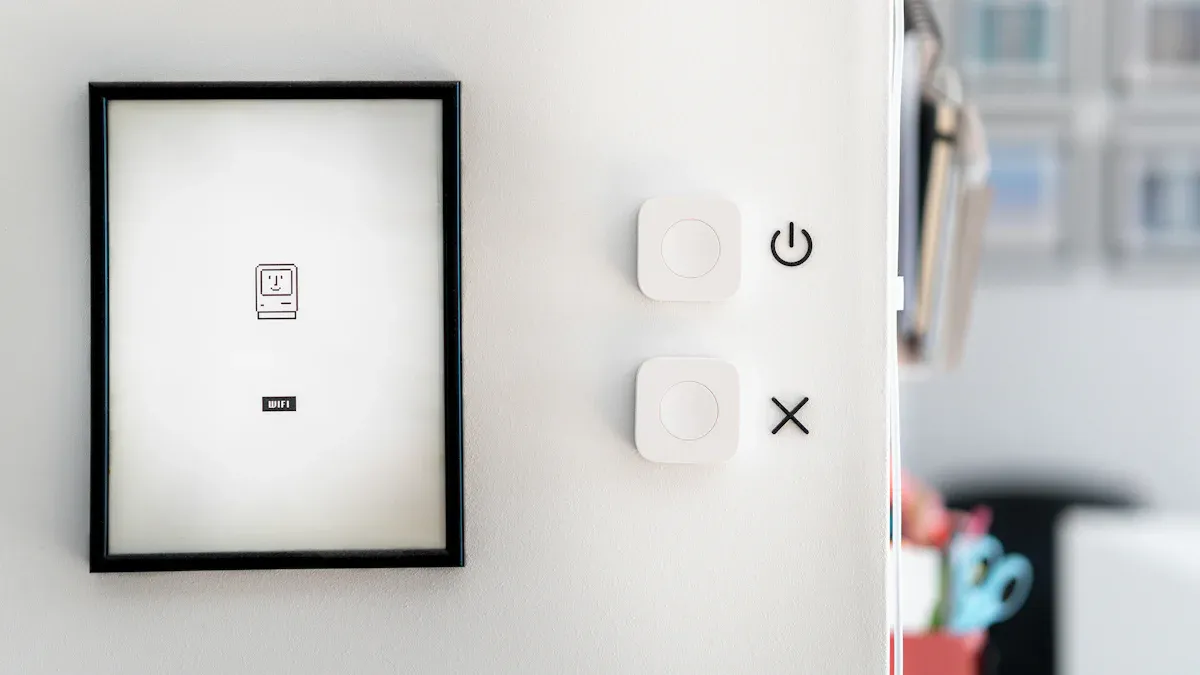
Switches are everywhere you look. They have many shapes and sizes. This guide helps you learn about the main types. There are three big groups: mechanical switches, electronic switches, and specialized switches.
Mechanical switches are ones you can touch. You flip, press, or slide them to control things. These switches use moving parts to open or close a circuit. You feel a click or snap when you use them. That feeling is called tactile feedback.
Here’s a table with common mechanical switches and where you find them:
Type of Switch | Description | Typical Applications |
|---|---|---|
You move a lever to turn things on or off. | Household lights, cars | |
You press a button to start or stop something. | Calculators, toys, doorbells | |
Rotary Switches | You twist a knob to pick different settings. | Fans, ovens, old radios |
Rocker Switches | You rock a lever to control power. | Power strips, coffee makers |
Slide Switches | You slide a tab to change the circuit. | Remote controls, small gadgets |
You use these switches every day. Toggle switches turn on lamps. Push button switches start games. Rotary switches help you pick fan speed. Each type lets you control devices in a different way.
Mechanical switches need care because their parts wear out. They are bigger and heavier than other switches. You feel them move when you use them.
Tip: If you like pressing buttons or flipping levers, you are using mechanical switches!
Electronic switches do not have moving parts. You do not feel a click or snap. These switches use tiny electronic parts called semiconductors. They control electricity by changing signals inside a circuit.
You find electronic switches in computers and smartphones. They are small and light. You do not need to touch them. Sometimes, you use a remote or an app to control them.
Here’s a table that compares mechanical and electronic switches:
Feature | Mechanical Switches | Electronic Switches |
|---|---|---|
Operation | You move metal parts to open or close | Uses semiconductors, no moving parts |
Tactile Response | You feel a click or snap | No physical feedback |
Maintenance | Needs regular care | Needs less care |
Size | Bigger and heavier | Smaller and lighter |
You use electronic switches in many devices. They help you control things quickly and easily. You find them in smart switches that connect to Wi-Fi. These switches let you turn on lights from your phone.
There are many types of electronic switches. Some common types are solid-state relays, smart switches, and switches made with special materials. These switches work fast and save energy.
Some switches do special jobs. You find these in advanced technology and industry. They help you control things in new ways.
Here’s a table with some unique switch types and what they do:
Switch Type | Description |
|---|---|
MEMS Switches | Tiny switches made in silicon. Used for radio signals and small devices. |
Optical Switches | Control signals using light. Used in fiber-optic networks. |
Smart Switches (IoT) | Connect to the internet. You control them with apps or voice commands. |
Gallium Nitride (GaN) and Silicon Carbide (SiC) Switches | Work at high voltages and speeds. Used in power electronics. |
Spintronic Switches | Use electron spin for memory and fast computing. |
Solid-State Relays (SSR) | Combine electronic switches with light for safe, fast switching. |
You see specialized switches in factories and hospitals. These switches help you manage complex systems. They make life easier by working faster and smarter.
This guide shows you how each switch type works. You can choose the right switch by knowing the differences between mechanical, electronic, and specialized switches.
You see many electrical switches every day. Each one helps you control electricity in its own way. Let’s look at the most common types and how you use them.
Toggle switches are easy to find. You flip a lever up or down to turn things on or off. These switches work well for lights and tools. You hear a click when you use them. Toggle switches are simple and last a long time.
Rocker switches let you rock a button back and forth. You often see these on power strips and appliances. They make it easy to control power with a gentle push. Rocker switches are safe and strong.
Push-button switches are found everywhere. You press a button to start or stop something. You see these on calculators, toys, and doorbells. Push-button switches give you fast control over circuits.
Rotary switches have a knob you turn to pick settings. You find these in fans, ovens, and audio gear. Rotary switches help you choose the mode you want. Here’s a table that shows how rotary switches work and where you use them:
Type of Rotary Switch | Operational Principles | Typical Applications |
|---|---|---|
DPST | Has two inputs, turns to move contacts, can turn things on or off, uses a detent to hold positions, keeps circuits apart | Used in machines, motor control, heating, cars, power, audio, lights, solar systems |
DPDT | Has two inputs, turns to move contacts, can change circuit paths, breaks one before making another, uses a detent | Used in audio, control panels, phones, motors, test gear, power, lights, cars |
Slide switches use a small tab you slide to change the circuit. You see these in remotes and small gadgets. Slide switches let you turn things on or off or pick a mode. Here’s a table that explains how slide switches work:
Functionality | Description |
|---|---|
Basic Function | Lets you turn things on or off or pick a mode. |
Operation | Has three terminals; connects the common one to others when you move the slider. |
Common Applications | Used in electronics, machines, medical devices, cars, and home appliances. |
Selector switches help you pick between settings. You turn a knob or move a lever to choose the mode you want. These switches are great for machines and control panels.
If you want a strong selector switch, try the Selector Switch from Sanli Electric Technology Co., Ltd. This switch gives you lots of control over your equipment.
This switch is made for tough jobs. The Selector Switch keeps working even with heavy use. Its design lets you pick from many settings. Sanli Electric Technology Co., Ltd. makes waterproof and shock-resistant models.
You can use this selector switch in factories, automation, and other big jobs. The switch lets you change settings fast. Its simple design means anyone can use it, even if you are new to controls.
Tip: If you need a switch that lasts and fits your needs, the Selector Switch from Sanli Electric Technology Co., Ltd. is a good pick!
Switches are all around your house. You flip a switch to turn on lights. You press a button to play games. Fans and TVs need switches to work. Switches help you control power and settings. Some switches change volume or brightness. You use switches in kitchen tools and toys. Remote controls also have switches. Each switch has a special job. Switches make life safer and easier.
Did you know? Smart switches let you use your phone or voice to control lights. You can set timers or make scenes for your home.
Factories need strong switches for machines. You use switches to start or stop motors. Some switches change how fast things go. Selector switches from Sanli Electric Technology Co., Ltd. are good for hard jobs. These switches keep workers safe. You see switches in robots and control panels. Some switches work in wet places. Others can handle shocks and dust. Industrial switches last long and work every day.
Application Area | Common Switches Used | Typical Applications |
|---|---|---|
Manufacturing | Selector, push-button, rotary | Machine control, conveyor systems |
Automation | Electronic, toggle | Robotics, process control |
Safety Systems | Emergency stop, slide | Alarms, shutdown procedures |
Networking switches connect computers and devices. These switches help you share data and internet. You use them at school, work, and home. Networking switches link many devices together. You use them for gaming, streaming, or working. Some switches are fast for big files. Others work with wireless connections. Networking switches make talking and sharing easy.
Tip: Pick a switch that fits your network to get smooth internet.
When you choose a switch, make sure it fits your project. First, think about what you need the switch to do. Is it for turning things on and off? Or do you need it to change modes in a machine? In automation, you want switches that last a long time. They should work well even if you use them a lot. Always check the voltage and current ratings. Some switches are best for small devices. Others are made for big machines. If you need a switch for industrial automation, try the Selector Switch from Sanli Electric Technology Co., Ltd. It is flexible and reliable. You can count on it to keep your equipment working.
Think about where you will use your switch. Most switches work fine in different temperatures. But humidity can cause problems. High humidity can mess up sensors and cause mistakes in automation. You need a switch that keeps out water and dust in tough places. The Selector Switch from Sanli Electric Technology Co., Ltd. has waterproof and shock-resistant models. These features help your switch stay reliable in harsh conditions.
Let’s see how you pick a switch for automation. In a robotic welding cell, engineers use an interlock switch for the gate. If the gate is not closed, the system sends a code to the controller. This helps workers fix problems quickly. It keeps automation safe. When you want a reliable setup, choose a selector switch that is strong and easy to use. The complete guide helps you find the right switch for your needs. This makes sure your system works well and stays safe.
You’ve learned what a switch does and why it matters. Here are your key takeaways: switches come in many types for different jobs. Picking the right one, like the Selector Switch, helps you stay safe and efficient. Explore more options and make smart choices for your next project!
Toggle switches use a lever you flip. Rocker switches use a button you rock back and forth. Both control power, but they feel different.
Yes! You can use a selector switch for DIY projects. It helps you pick different modes or settings easily. Just check the voltage and size.
Waterproof switches keep water out. You use them in wet places like factories or outdoors. This helps your switch last longer and stay safe.